Inside Red Caiman Studios: Photographic One of Pittsburgh’s Premier Recording Spaces
A couple of years ago, Jesse Naus moved his recording and media production business, Red Caiman Studios, from its former home in Pittsburgh’s Uptown neighborhood to a much larger space just north of the city. Since then, he hasn’t missed a beat. Sessions have continued, the client list has grown, and the studio has expanded further into video services, all while staying rooted in its goal to be a premier, high-end studio delivering the absolute best in recording and production services.
You feel that immediately when you walk in the building. From outside, Red Caiman is modestly situated in a former church. Once you walk through the doors, though, you will find some of the most grand, purpose-built recording spaces anywhere in the region. Each room is outfitted with modern, state-of-the-art gear and beautiful acoustic treatments that serve both functional and aesthetic purposes.
As Red Caiman continues to gain momentum, the need for strong visual content grows as well. Several rooms have been renovated recently and more will be coming online in the months ahead. I was brought in to help them showcase these updated facilities, but my task was not only to photograph the finished rooms, but to make sure those images carried the same “wow” factor people experience in person. No pressure, right?
Jesse and I have worked together on many projects over the years, including video shoots for the Pittsburgh Camerata, other Red Caiman-specific sessions, and even some projects at Duquesne University's Mary Pappert School of Music where I am the Director of Music Engagement, Events, and Marketing and Jesse serves as Assistant Professor of Music Technology. Several of my other clients have come to me through him, including artists like Chase Barron and the Aris Paul Band. At one point, prints of my Pittsburgh photography were even hanging in his former studio space. I am proud of all of that, because it reflects a core of my own business—trust. I know that repeat work and referrals only happen when clients are genuinely proud of what you help them create and trust you enough to call you back or recommend you to someone else.
Red Caiman has long attracted a wide range of clients, from local and regional artists to nationally recognized, all-star-level talent, and that range is reflected in how the studio has been designed and refined. It is most certainly a space that feels welcoming without feeling small, and impressive without feeling intimidating. Ironically, I get to be the one that is intimidated. I mean, how am I supposed to represent the grandeur of a space like this in just a few still images?
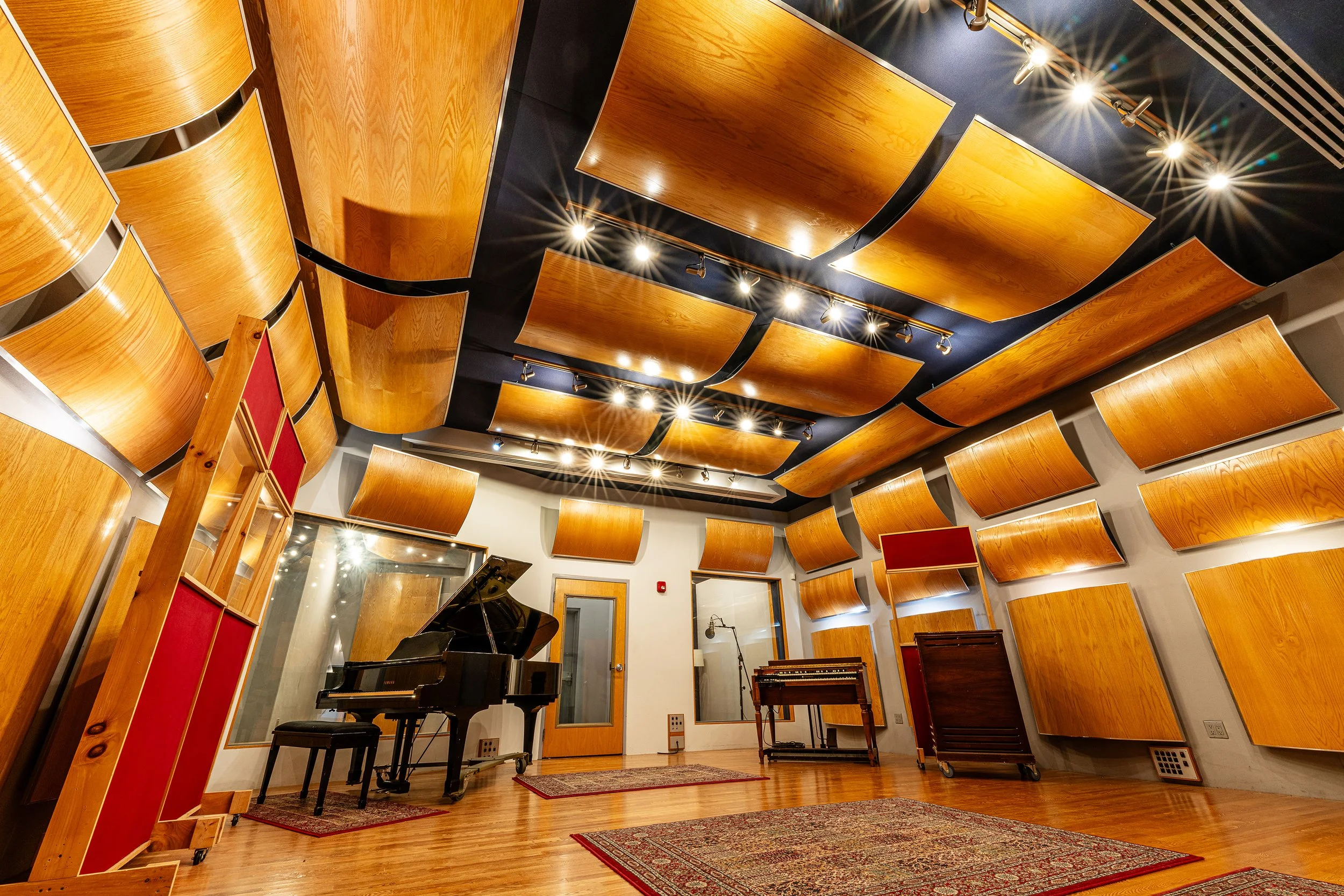
For this shoot, we focused on the rooms that have been renovated and are regularly in use at Red Caiman right now. Studio A, the largest of the tracking rooms, anchors the business and is outfitted with two isolation booths, a grand piano and a Hammond B3 with Leslie. Its control room, equally as spacious, is connected by a wall of glass that allows engineers and producers to stay visually connected with performing artists during sessions.
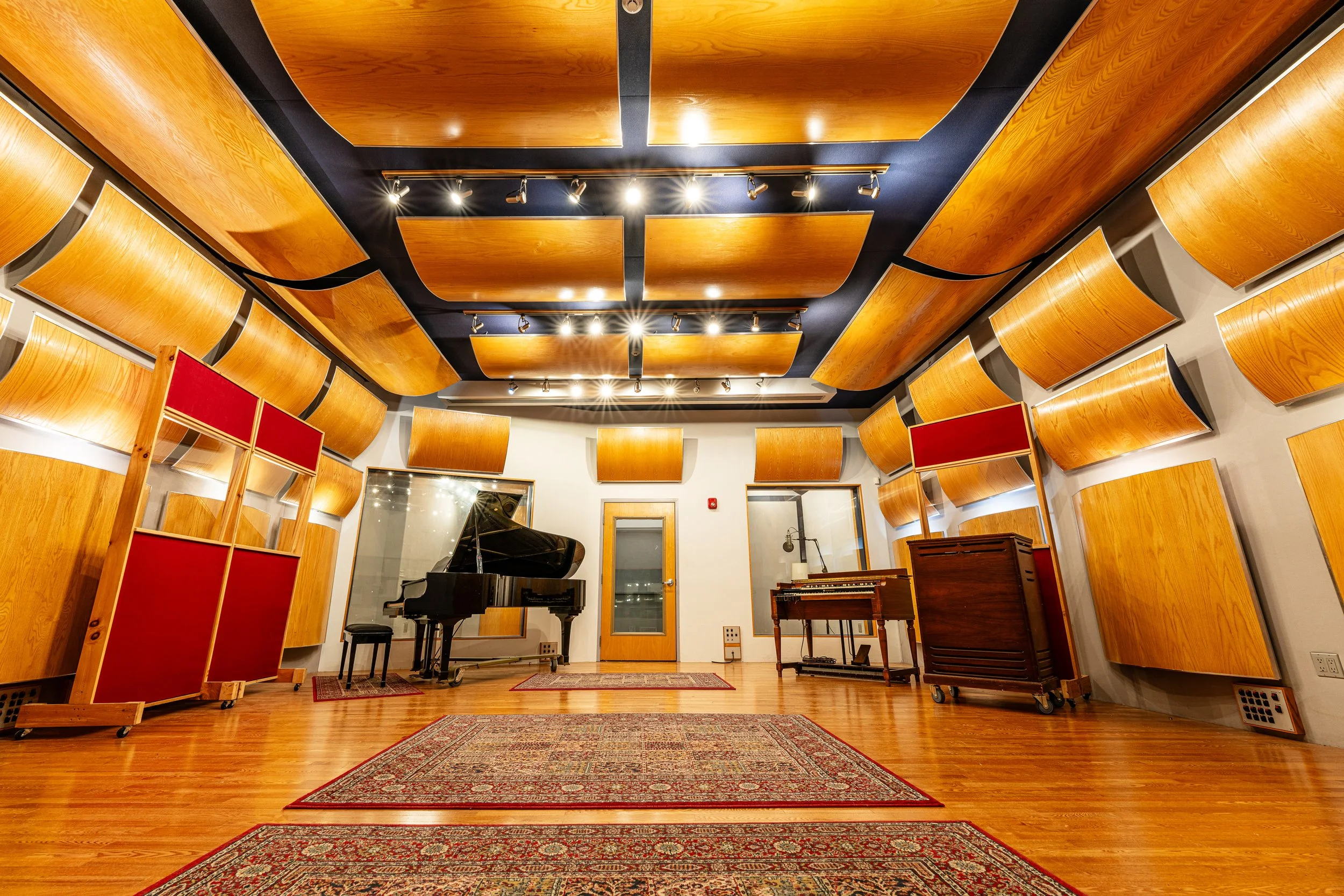
Studio A, Red Caiman's flagship recording room.
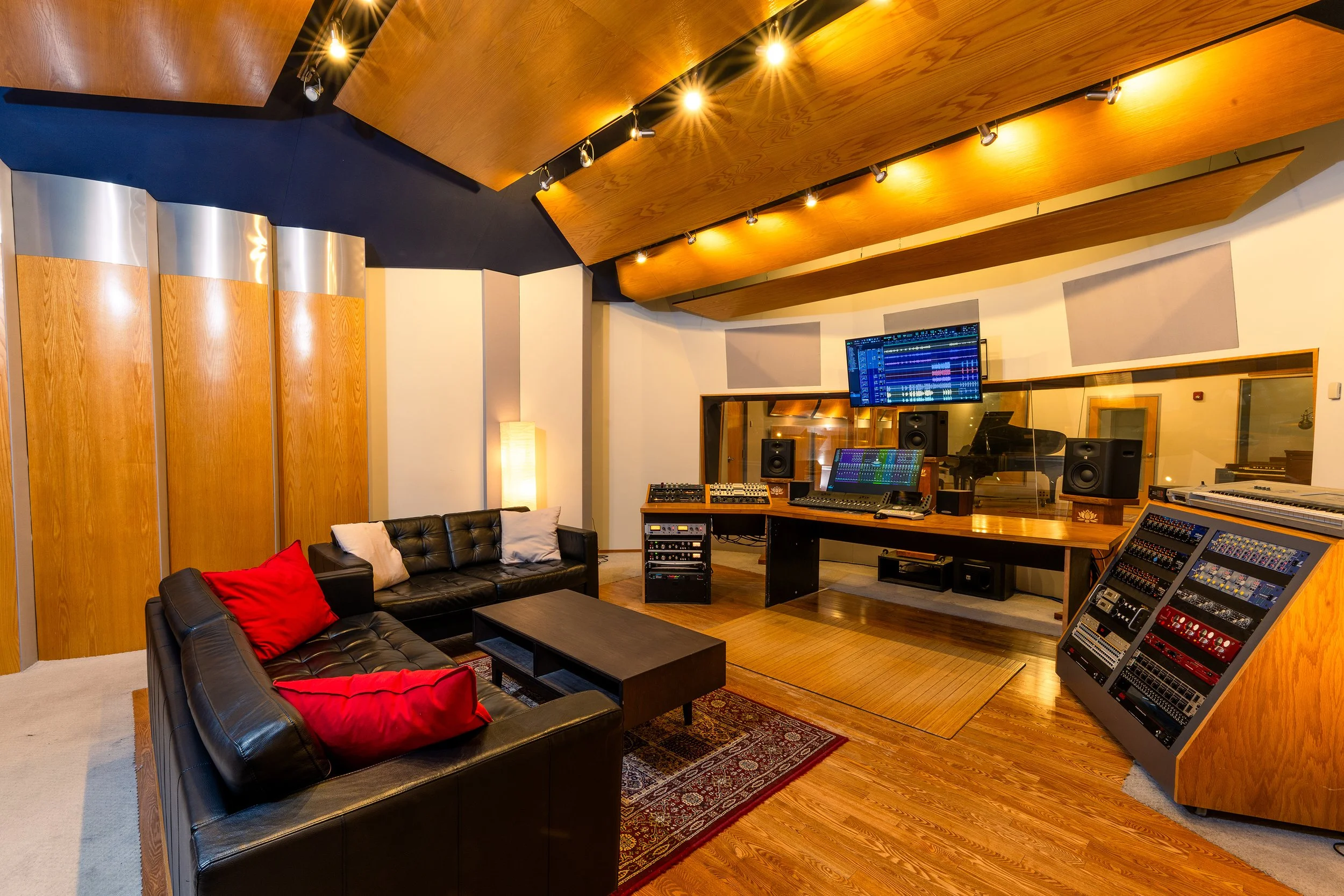
The control room for Studio A.
Studio C’s focus is on video work, and it connects directly to a capture room outfitted with three cinema cameras and modern video lighting ideal for interviews and video podcasts.
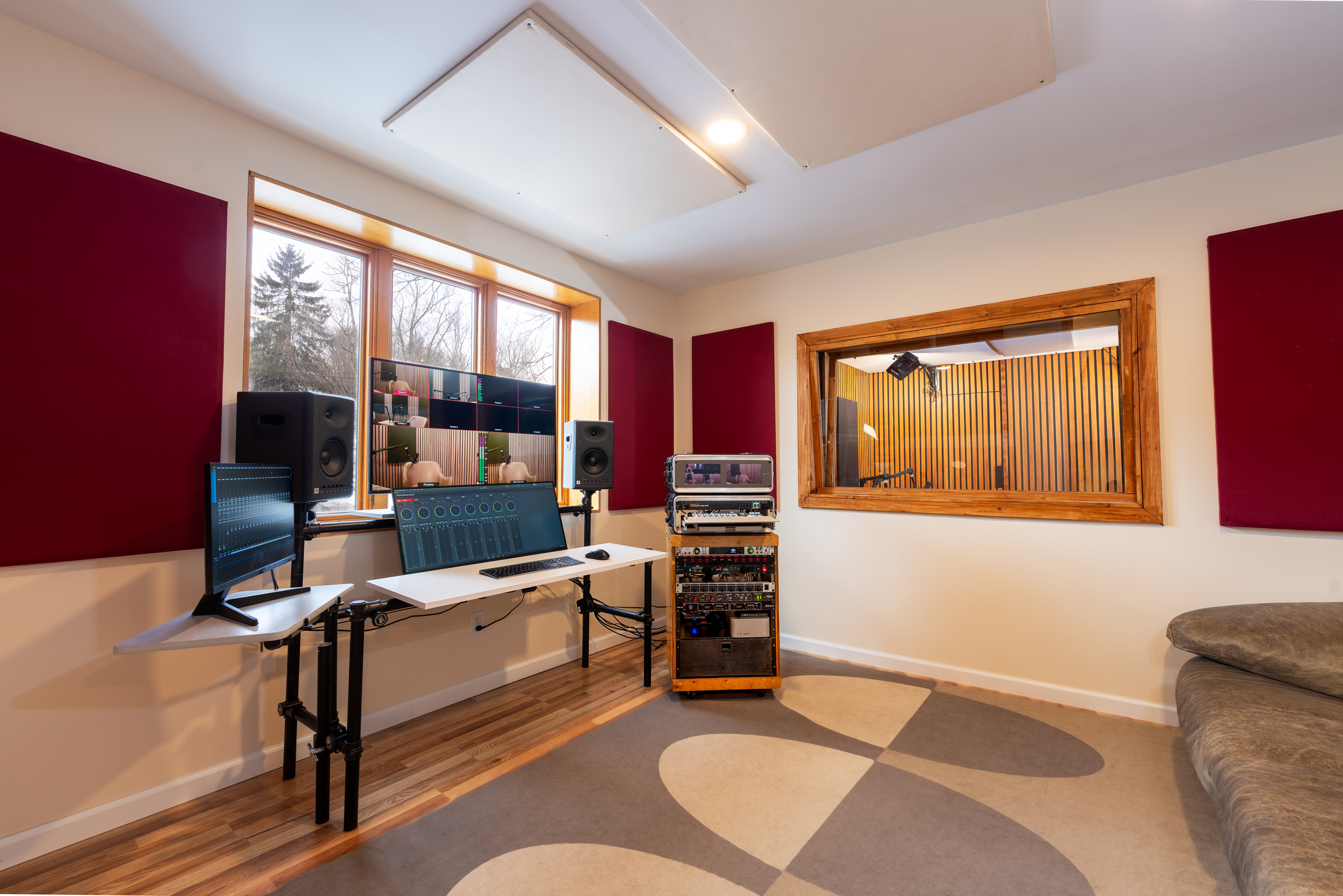
Studio C's control room.
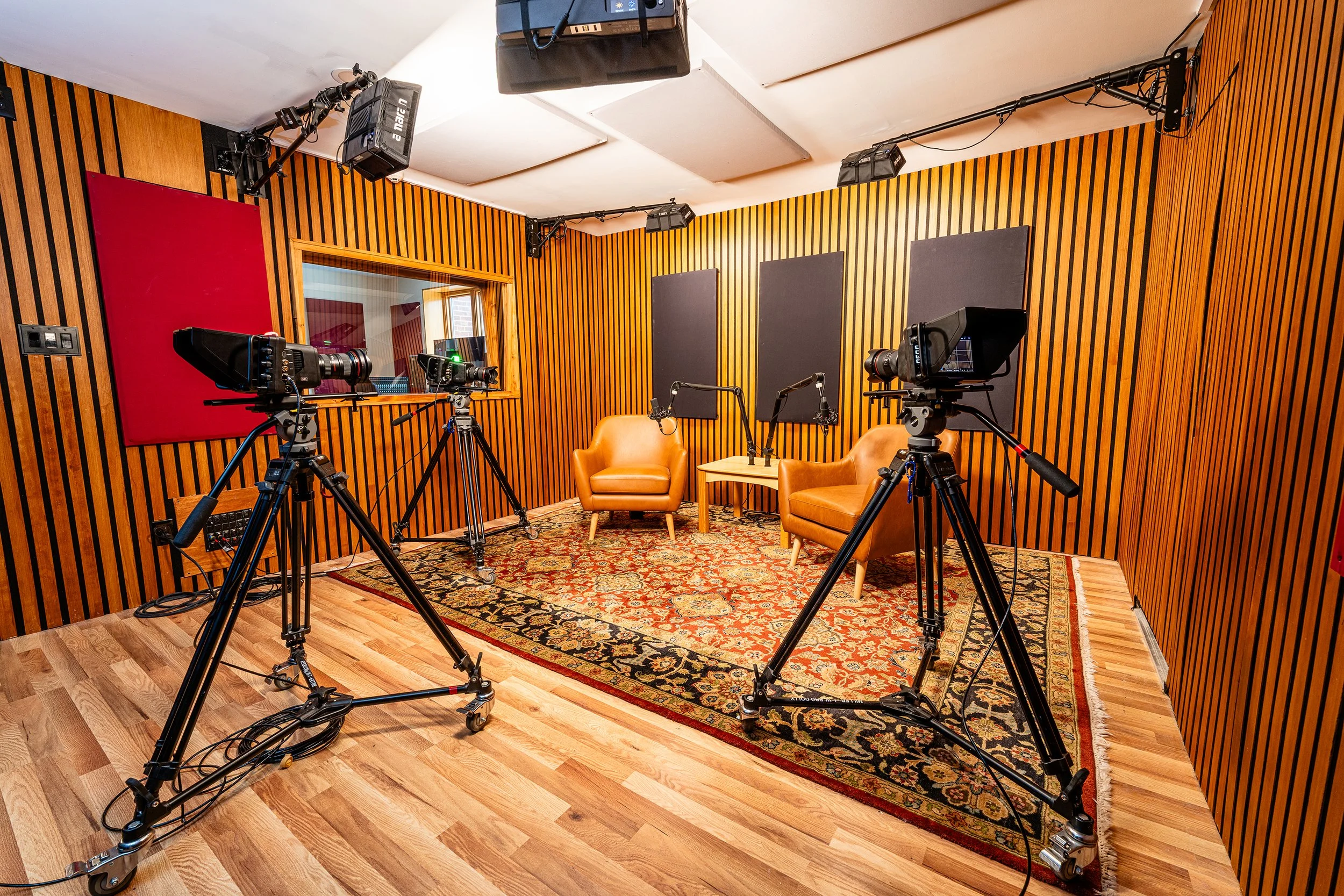
Studio C's capture room, staged for an interview style video.
Studio E offers a more focused environment, ideal for voice-over work and individualized sessions.
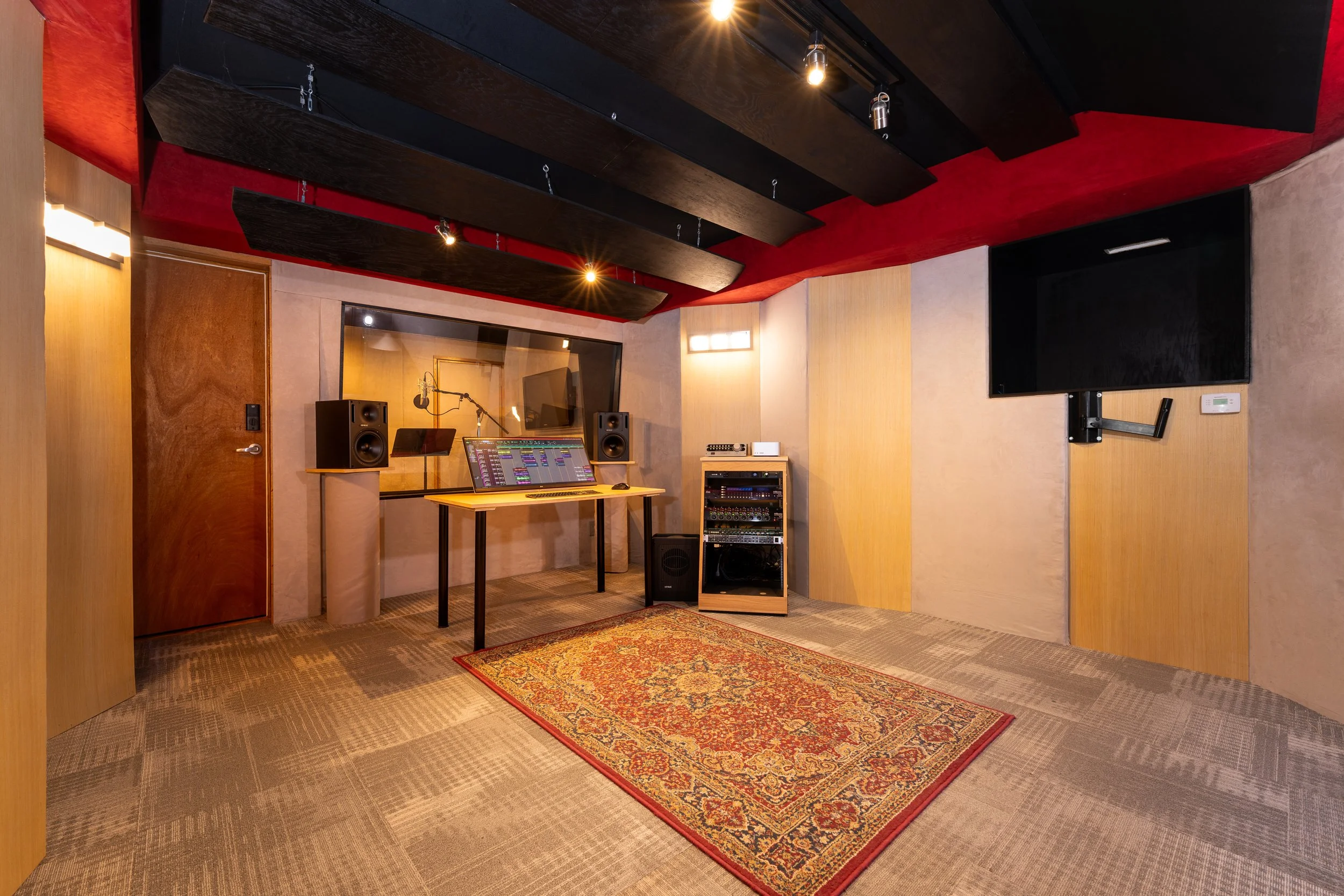
Studio E.
We also photographed the green room connected to the adjoining live stage area, a space designed for artists between moments of performance and production.
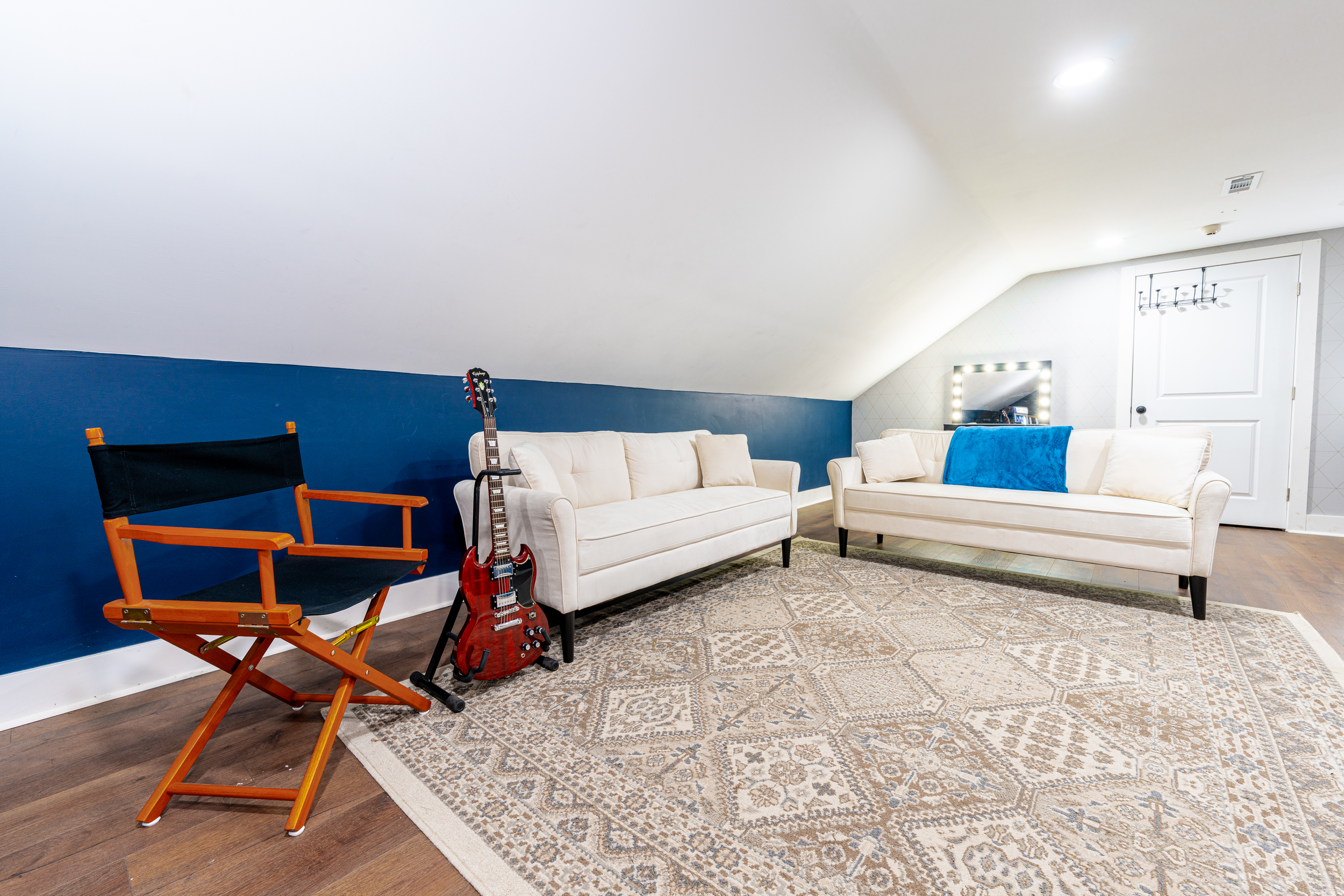
The upstairs green room for artists.
While the stage and a couple of other studio rooms were not quite ready to be photographed yet, I will be back soon and will be sharing those spaces as they come online.
I said it before, but it bears repeating—mutual trust is such a critical and rewarding factor in these types of projects. Rather than staging everything ahead of time and creating something that felt more like stock photos than showcase images, Jesse relied heavily on my eye to help represent the studio at its best. We worked through each room together, tidying wiring, repositioning chairs, improving sightlines, and placing instruments, microphones, and other gear intentionally. The goal was not to make the studio look artificial or overly staged, but to show how each room looks and feels when everything is dialed in and ready to go.
That collaboration made the process efficient and natural. Jesse knows these rooms inside and out because he lives in them every day. I know how subtle changes in perspective can dramatically change how a space reads on camera. Bringing those two viewpoints together allowed us to move quickly and make decisions that ultimately resulted in a set of images that really capture the breadth and depth of the work he does.
From a technical standpoint, I relied heavily on my 14mm lens stopped down enough to keep the entire room in focus from front to back. Some of these rooms really are expansive, and the wide field of view allowed that scale to translate perfectly to imagery. I also shot from lower vantage points and angled upward in many cases to emphasize verticality and the ceiling treatments that play such an important role in both the functionality and character of the space.
Lighting was kept intentionally minimal. I added strobes to fill darker areas only where needed. Red Caiman’s existing lighting is also part of the experience, and I wanted my photos to respect that reality rather than trying to overpower it.
There is a clear parallel between running a studio and shaping its visual identity. Both are ongoing processes that must happen simultaneously. You can’t stop serving clients while refining your brand, and you certainly can’t stop trying to improve just because you already have something that works.
That is exactly what this shoot represents. A studio operating at a high level, continuing to evolve, and investing thoughtfully in how its story is told visually. With more rooms coming online soon, I will be back to continue documenting that evolution, and I cannot wait to help Red Caiman tell the next part of its story.