The Unassigned Photograph: Hidden in Plain Sight
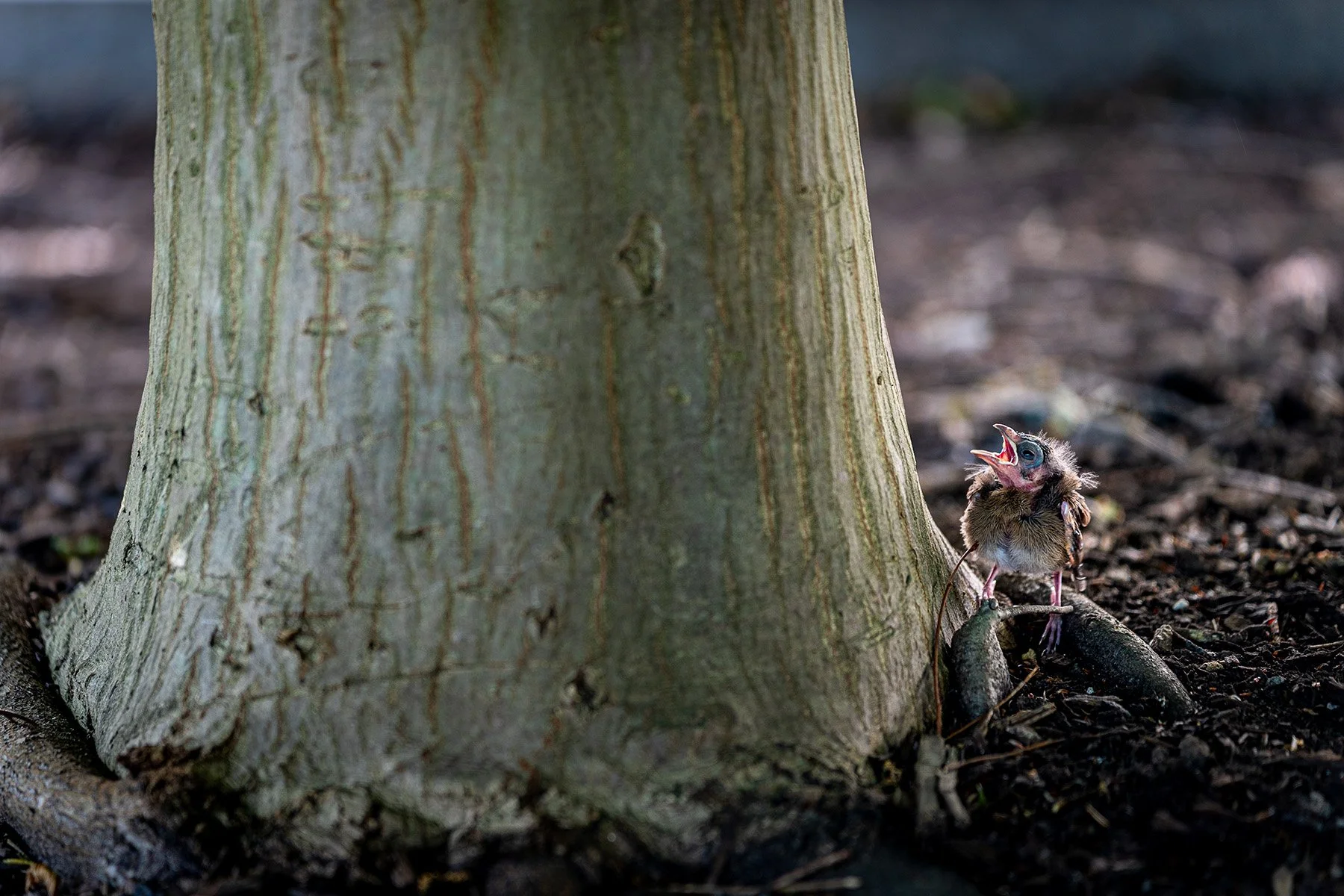
This was not the photograph I was there to make.
I was working an event assignment recently, photographing the private opening reception for The Frick Pittsburgh’s French Moderns exhibition. It was a gorgeous day, and the event moved between the museum itself and the front patio outside. Inside, guests walked through the exhibition and gathered around the art. Outside, the evening had that easy early-summer feeling where conversation, food, drinks, and friendship intersected to create an atmosphere that felt relaxed and alive.
The job was clear enough. I was there to document the evening. To capture the setting, the people, the atmosphere, and the details. To make photographs that could help preserve the shape of the event and celebrate the works, the artists, and the people who were there to enjoy it.
That is one of the challenges and rewards of event photography. You are rarely telling one story at a time. You are watching several layers of a moment unfold at once, trying to understand what each layer contributes to the whole.
There is landscape: the rooms, the architecture, the patio, the way people move through a space, the way the light changes as the evening goes on.
There is figure: guests arriving, conversations forming, speakers addressing a room, people reacting to the experience they are part of.
There is still life: glasses on trays, programs on tables, flowers, signage, place settings, and the small evidence of planning and care.
Those are the photographs the assignment asks for. They matter. They make up the official story, or at least the story the event knows how to tell about itself.
But then there was the bird.
At the base of a nearby tree was a baby bird that had either fallen from a nest or had not quite figured out flying yet. By all appearances, it seemed physically fine. It was moving around on foot, alert and alive, just not taking to the air. It was small, awkward, vulnerable, and entirely outside the plan. It had nothing to do with the exhibition opening, except that it was there.
So, I photographed it.
I knew, even in that moment, that it wasn’t part of the story I was there to document, but something drew me to take the photo anyhow. I knew it likely wouldn’t matter to The Frick, but for whatever reason, it mattered to me.
Later, one of the caterers quietly pointed it out to me, in case I had missed it. I had already taken the photograph, but still, I appreciated the gesture because it confirmed for me that those moments are noticed by others, too. She had her assignment. I had mine. But this small thing in the periphery had interrupted both of us.
That stuck with me.
Life does not pause just because there is an assignment in front of you. Things keep happening at the edges. Sometimes they matter to the work. Sometimes they do not. But noticing them is what gives them a chance to become real in the first place.
That does not mean every photograph belongs in the final gallery. It does not mean every noticed thing should become part of the client’s story. In this case, it did not. Part of being a working photographer is understanding the difference between what you see, what you deliver, and what you keep.
For a different client, or even a different assignment for the same client, that bird very well may have been part of the story. It could have been the unexpected detail that gave the whole event a different meaning. It could even have been an image that changed the trajectory of the shoot altogether.
In this case, it was not part of the assignment, but it still made me stop. It still meant something to me.
For me, it became the kind of image that belongs somewhere like this blog. Not because it explains the event, but because it explains something about how I see when I am working. Maybe the caterer noticed it for a completely different reason. Maybe someone else noticed it and kept walking. Maybe someone else saw it and thought about a nest, or a lawn, or a kid at home, or nothing in particular.
Maybe that is why the old line about beauty being in the eye of the beholder refuses to go away. It is not always about beauty, exactly. Sometimes it is about meaning. One person sees an interruption. Another sees a problem. Another sees a photograph. Another sees a small life trying to figure out what comes next. And all of these meanings came from just one bird in one place.
The assignment gives you a reason to be there. Attention gives you a reason to keep seeing.
That distinction matters to me.
When I photograph an event, I am not only looking for proof that something happened. I am looking for the shape of the experience. I am looking for how a room feels before it fills, how people gather, what details reveal the care behind the scenes, and where the unexpected moments lie.
Sometimes those moments are part of the event. Sometimes they are not. But they are absolutely still worth noticing.
The baby bird was not part of the opening. It was not part of the exhibition. It was not part of the work I was hired to create. But it reminded me that I never want to lose the habit of noticing everything, regardless of whether its place in the assignment is immediately clear.
That is easy to forget in professional creative work. Assignments are necessary. Deadlines are necessary. Shot lists, deliverables, galleries, captions, approvals, edits, and invoices are all part of the machine. They help turn creative attention into something useful.
But the assignment is not always the full boundary of the story.
Sometimes a photograph is created because it serves the client. Sometimes it is made because it serves the photographer. Sometimes it is made because a small, unexpected moment appears at the base of a tree and the only honest response is to pay attention.
This may not be a beautiful photograph in the traditional sense. It is a little uncomfortable. A little raw. It was certainly not as colorful as the artwork inside the museum.
But maybe that is why I keep thinking about it.
The opening had its own visual language: people, rooms, art, light, conversation, detail. The bird had no language for the event at all. It was just there, quietly existing (okay, noisily existing, since the thing was relentlessly cheeping…).
But this is part of the job. Not every photograph belongs to the assignment. Some just deserve to be noticed.