Not As Different As You’d Think: It’s All the Same Language
Last time I wrote, I said the dial was about to turn. Spoiler alert: It did. I mean, come on. I went from a metal show in a barbershop to a community band concert in a high school auditorium. That should be night and day, right?
Well…
Have you ever gone to a big box store in a different city than your own? You know the feeling—the second you step in the door, you are in a familiar space. Sure, the layout might be a little different, but everything else just feels like you’re back at home. The Three Rivers Community Band Festival was a lot like that. Different stage, different acoustic, but there’s a certain familiarity that comes from a life of playing in and photographing so many different halls. It was exactly the kind of energy shift I was expecting… and then some.
This gig came through a friend from college, which already sets that tone of familiarity. There’s a built-in shared history here. The guest conductor was another familiar thread—another fellow student from my college days at Duquesne University’s Mary Pappert School of Music. And if that wasn’t enough, my own band’s trombone player is part of the group that hired me!
Suddenly, I’m not just showing up as “the photographer.” I’m walking into a room where people know that I already speak the language (both music and photography), know some of the key players, and understand the rhythm of how these things breathe. It’s a small world in the best way. Music has this habit of looping people together over the course of time. Sometimes it’s years later, and others, it could be two completely different gigs on the same day.
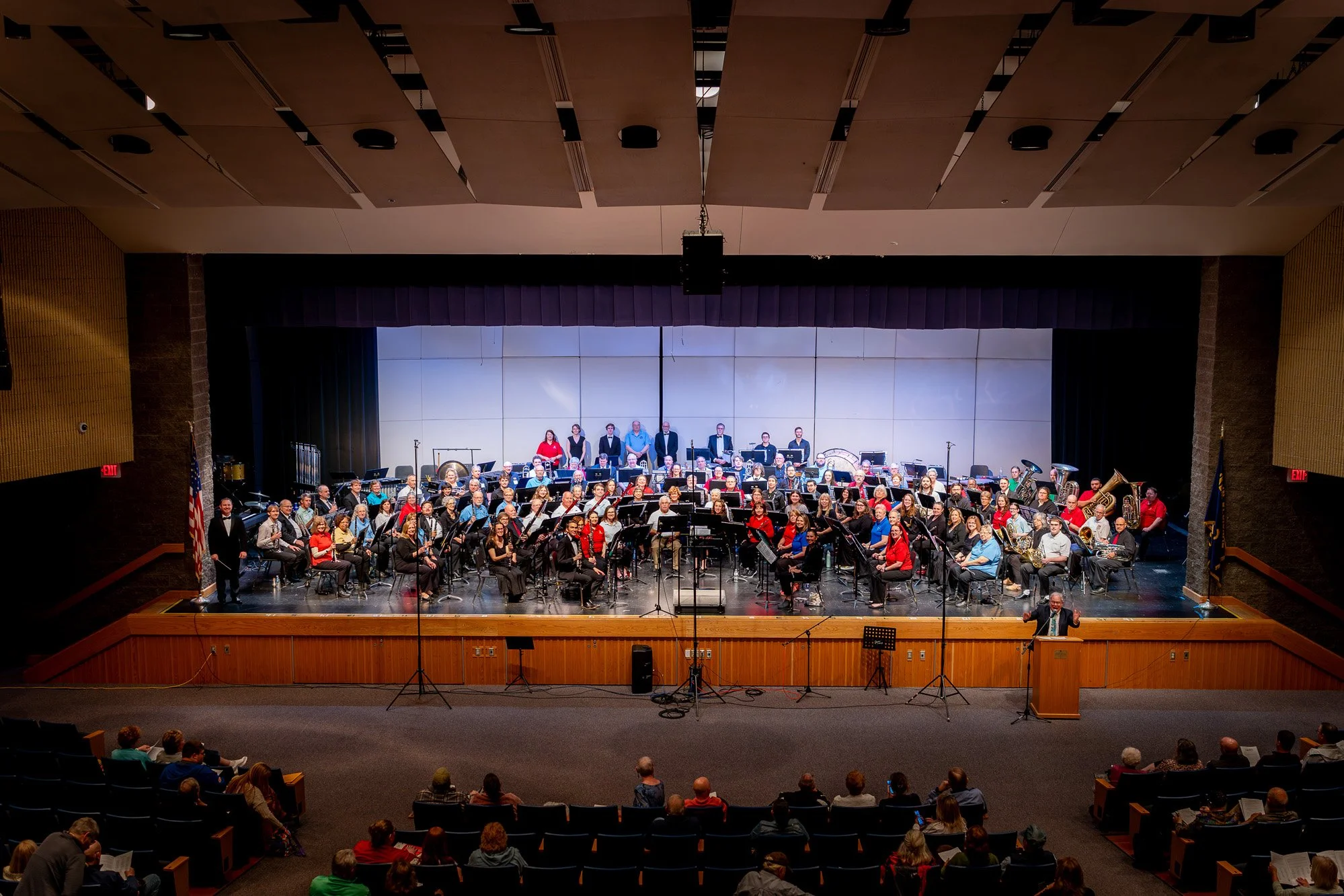
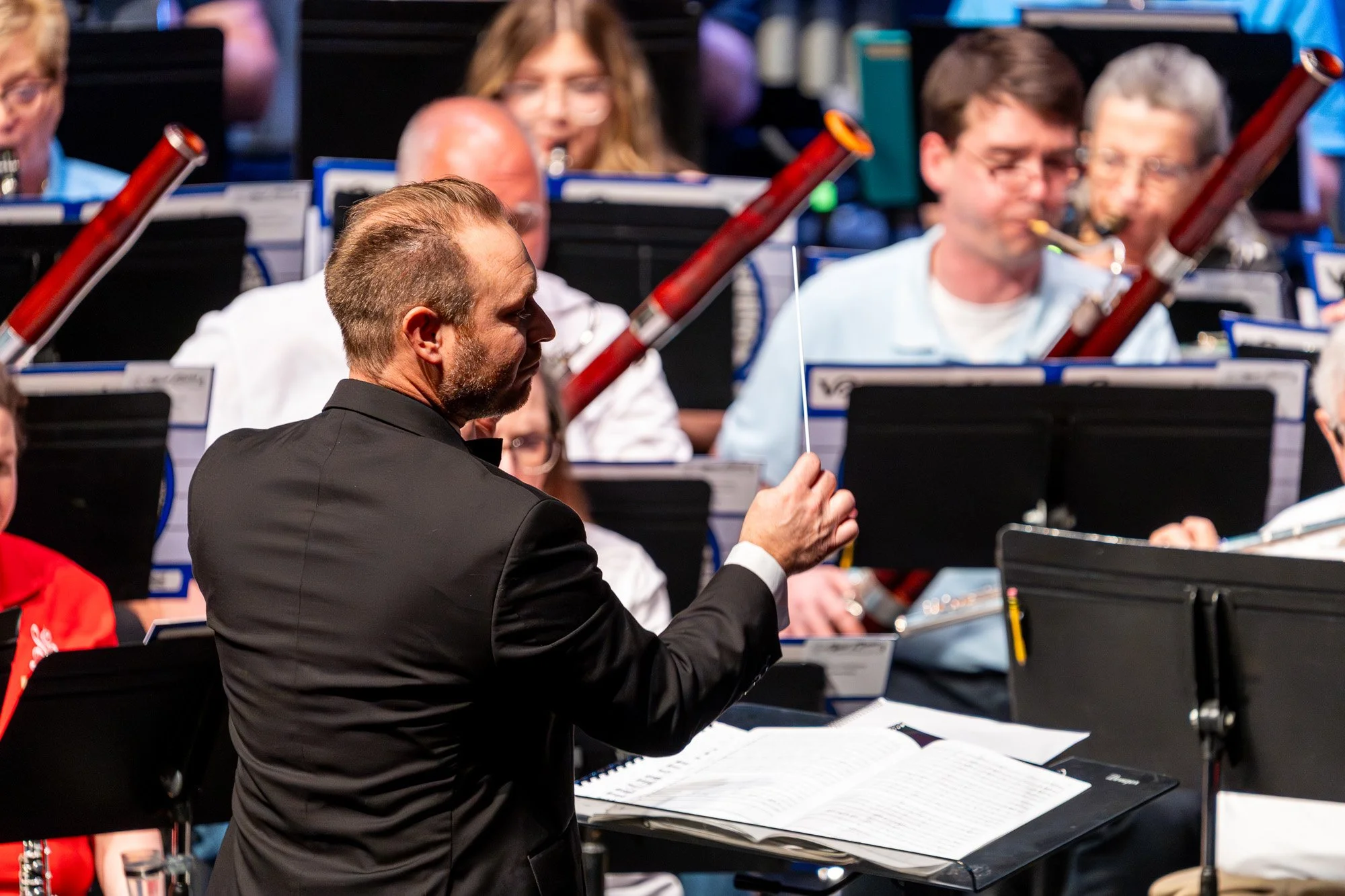
The festival itself was a marathon in the best sense: four community concert bands from around the Pittsburgh metro, one continuous program. The East Winds Symphonic Band, Scottdale Concert Band, Community Band South, and a Festival Band made up of members of each of the other three. Each ensemble brought its own personality to the stage, their unique approaches to texture, energy, and repertoire showcasing their individuality. From a photography standpoint, that’s what you’re looking for. Even though it might seem the same from band to band, you’re constantly adapting—reading posture, anticipating crescendos, catching those micro-expressions when a section locks in or a conductor pulls something special out of the group.
Shooting a single ensemble is about settling into a groove. Shooting four back-to-back is more like live improvisation. You don’t get comfortable. You stay sharp.
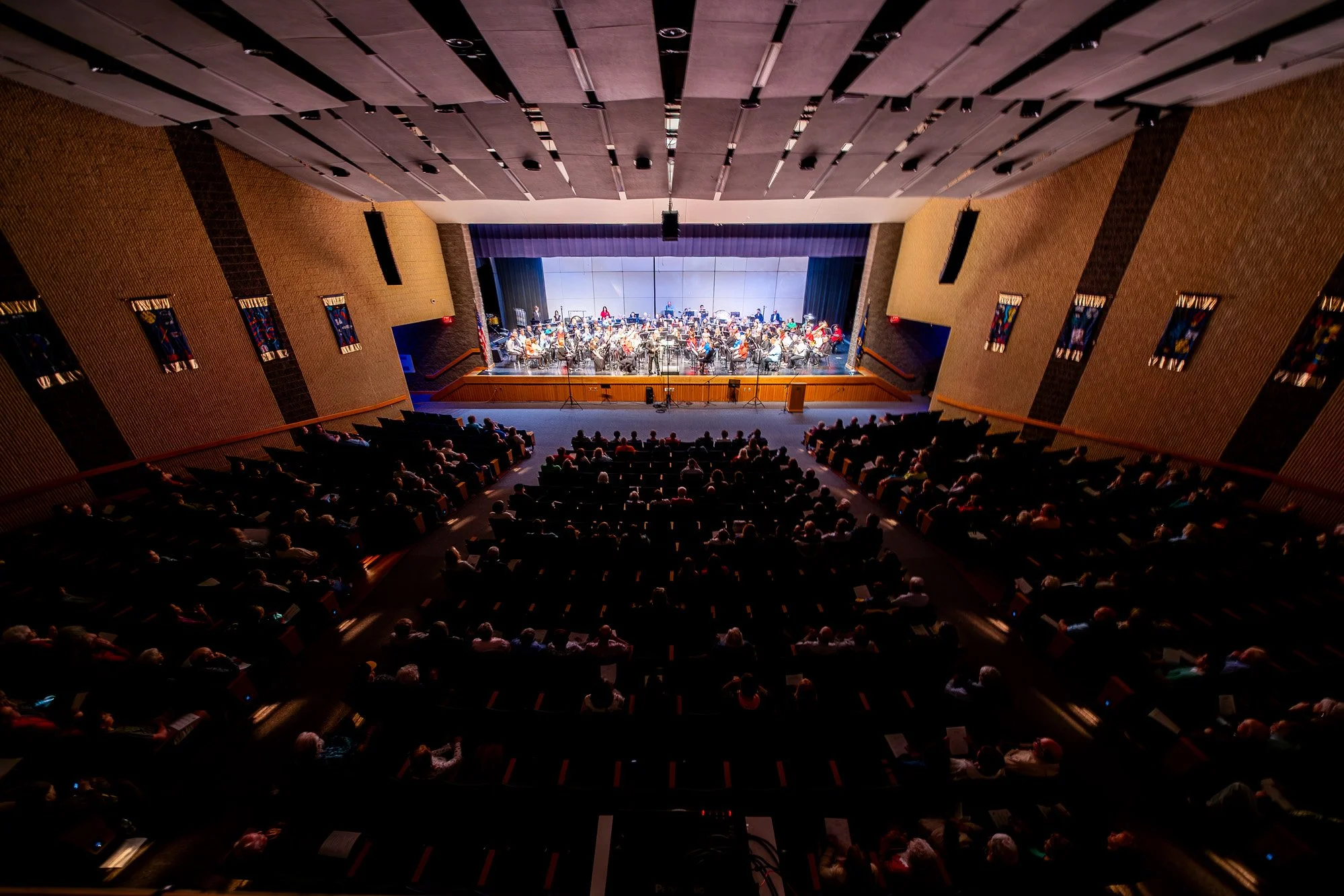
With all of that said, there was a key difference in how I approached shooting this particular event from other stage concerts. Usually, I am moving around the space left to right and front to back. This auditorium, though, was quite large, and there was a balcony where sightlines were really good. Most of the audience took seats on the lower floor, too, so I spent just about the entire performance on the balcony, shooting with my 200-600mm lens so I could get in close and a 35-150mm to get the medium-to-wide-angle shots. I even threw the 10mm on for some ultra-wide perspectives, which just make the space feel gigantic. (My knees also thanked me for not running up and down stairs a hundred times over the course of the show!)
The repertoire covered a lot of ground without feeling all over the place. There was the bold, structured sound of Clifton Williams’ Dedicatory Overture, as well as the gentler feel of Robert Sheldon’s With Every Sunrise. And yet, there was even room for a bit of off-kilter energy with David Biedenbender’s homage to jazz great Thelonious Monk, Melodious Thunk. Familiar moments like Moon River and West Side Story gave the audience something to grab onto, while Variations on a Korean Folk Song kept one foot planted in the core of the band world. And it all still made sense because each group played to its strengths, locking into precision and blend and leaning into color and movement.
And then the finale turned the dial all the way up.
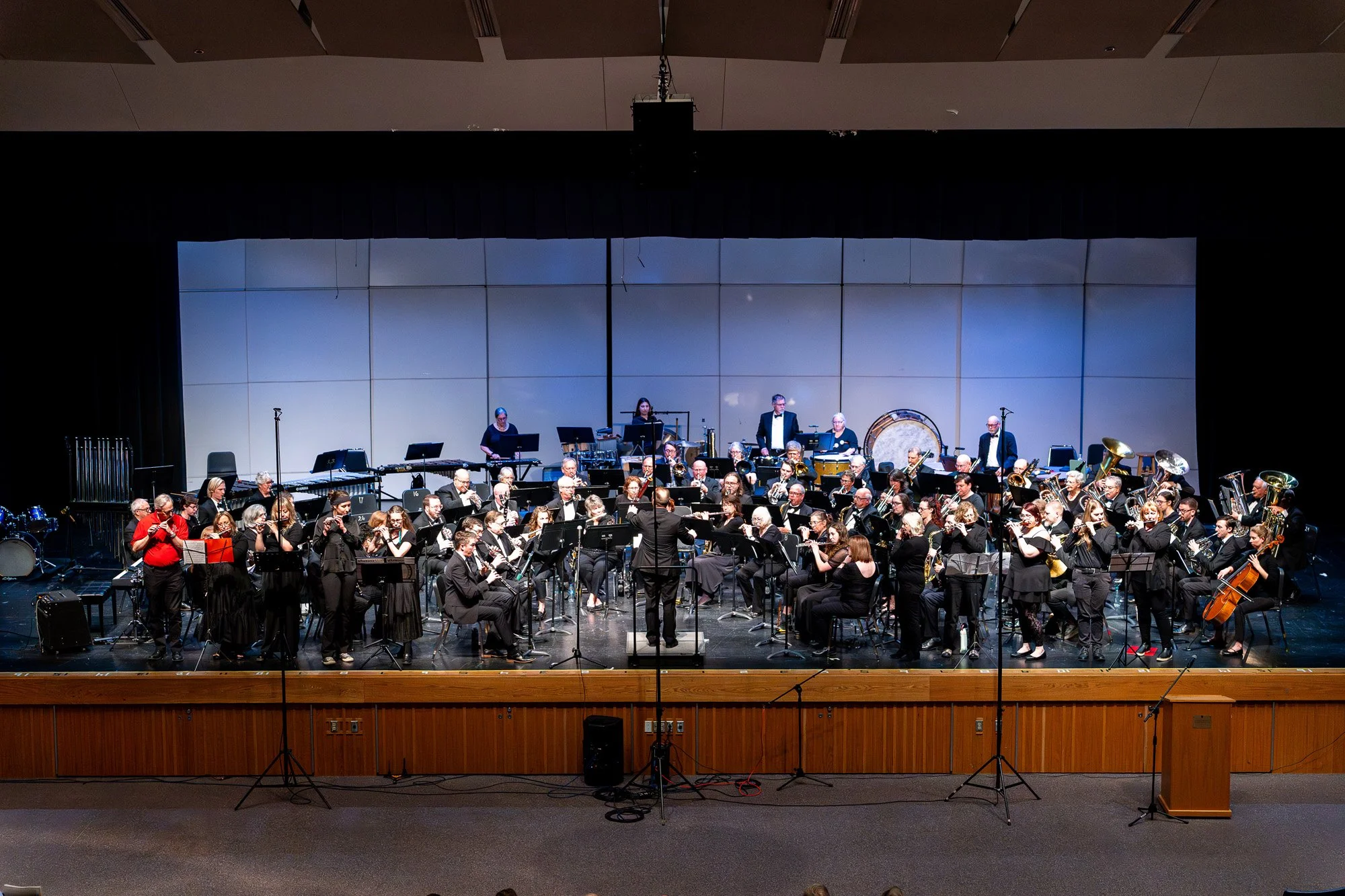
The concert closed with The Stars and Stripes Forever, John Philip Sousa’s calling card. This was no ordinary performance, though. Piccolo players from all three of the other bands joined East Winds on stage. More than a dozen piccolos stood across the front of the stage, playing along with their regular parts until it was their chance to turn it up to 11. And let me tell you, that signature piccolo solo didn’t just cut through, it shimmered above everything like a beam of light.
From behind the lens, it was one of those moments you can feel before it happens. Everyone, and I mean everyone, knew what was coming. They were on the edge of their seats, locked into that iconic ending. Then, of course, the trombones got their time to shine, standing to show off their soli. You couldn’t have asked for a better ending to a concert if you tried.
If you’ve been following along with some of the other work I’ve been posting lately, this probably feels like the next chapter. And you’re right—it’s still a concert on a stage, and it’s still the same process of translating that energy into two dimensions.
But to me, there’s more here, and it’s not just about the music or the logistics. It’s the overlap of communities. College connections from decades ago, current bandmates, and musicians from across the Pittsburgh area, all converging for one afternoon on one stage for one shared purpose.
That kind of environment changes how you shoot. You’re not just documenting an event. You’re capturing relationships, some of which are your own. You’re documenting history. The players have likely done this a hundred times together, but they’ll never get to play this particular concert ever again. Those few hours are forever locked in time, but now there are photos that showcase those hours in a way that can be relived forever.
By the end of the afternoon, I had hundreds of those memories on my camera. I also had a clear reminder of why I love working in this space. It’s not just about getting the shot. It’s about being a part of something bigger than me. It’s about the moments where music, memory, and community all collide in real time.